
Inhalt: non-Apis Working Group
History and Aims
Risk assessment of plant protection products (PPPs) for pollinators has historically relied on the honey bee (Apis mellifera) as a standard model organism. However, distinct differences in behavior, ecology, and exposure pathways mean A. mellifera alone cannot represent overall pollinator diversity. Established in 2014 under the International Commission for Plant-Pollinator Relationships (ICPPR), the ICPPR Non-Apis Working Group brings together global experts to advance and refine testing frameworks for wild bee species, helping build a robust scientific basis to safeguard non-Apis pollinators.
Inhalt: Chairs and Contact
Chair
Silvio Knaebe
E-Mail: silvio.knaebe@as.eurofinseu.com
Co-chairs
Tobias Jütte
E-Mail: tobias.juette@julius-kuehn.de
Ivo Roessink
E-Mail: ivo.roessink@wur.nl
Laboratory studies on bumble bees
Nina Exeler
E-Mail: nina.exeler@bayer.com
Laboratory studies on solitary bees
Ivo Roessink
E-Mail: ivo.roessink@wur.nl
Laboratory studies on stingless bees
Roberta Nocelli
E-Mail: roberta@ufscar.br
Semi-field studies on bumble bees and solitary bees
Olaf Klein
E-Mail: olaf.klein@as.eurofinseu.com
Inhalt: Current Activities
Solitary bees
Laboratory studies
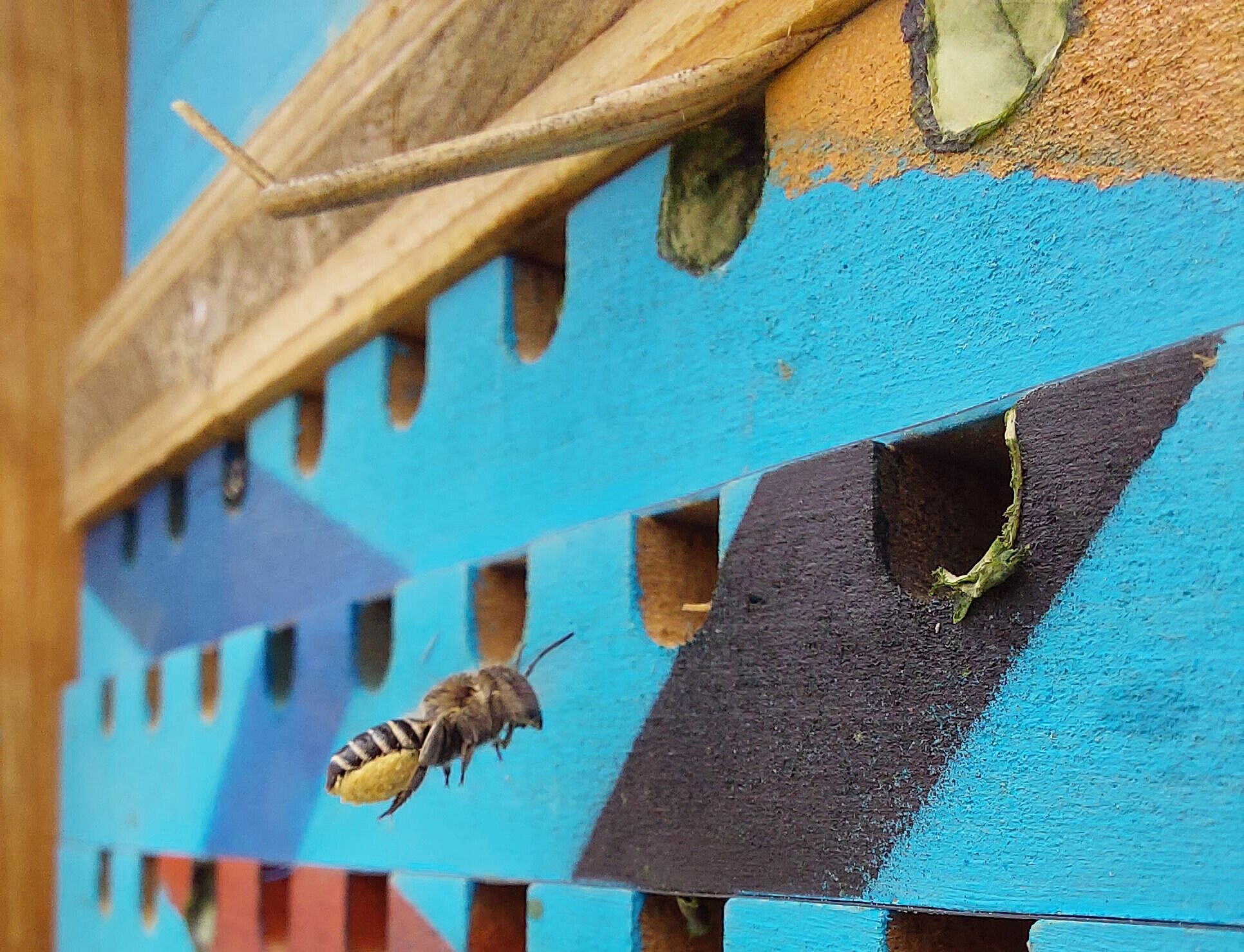
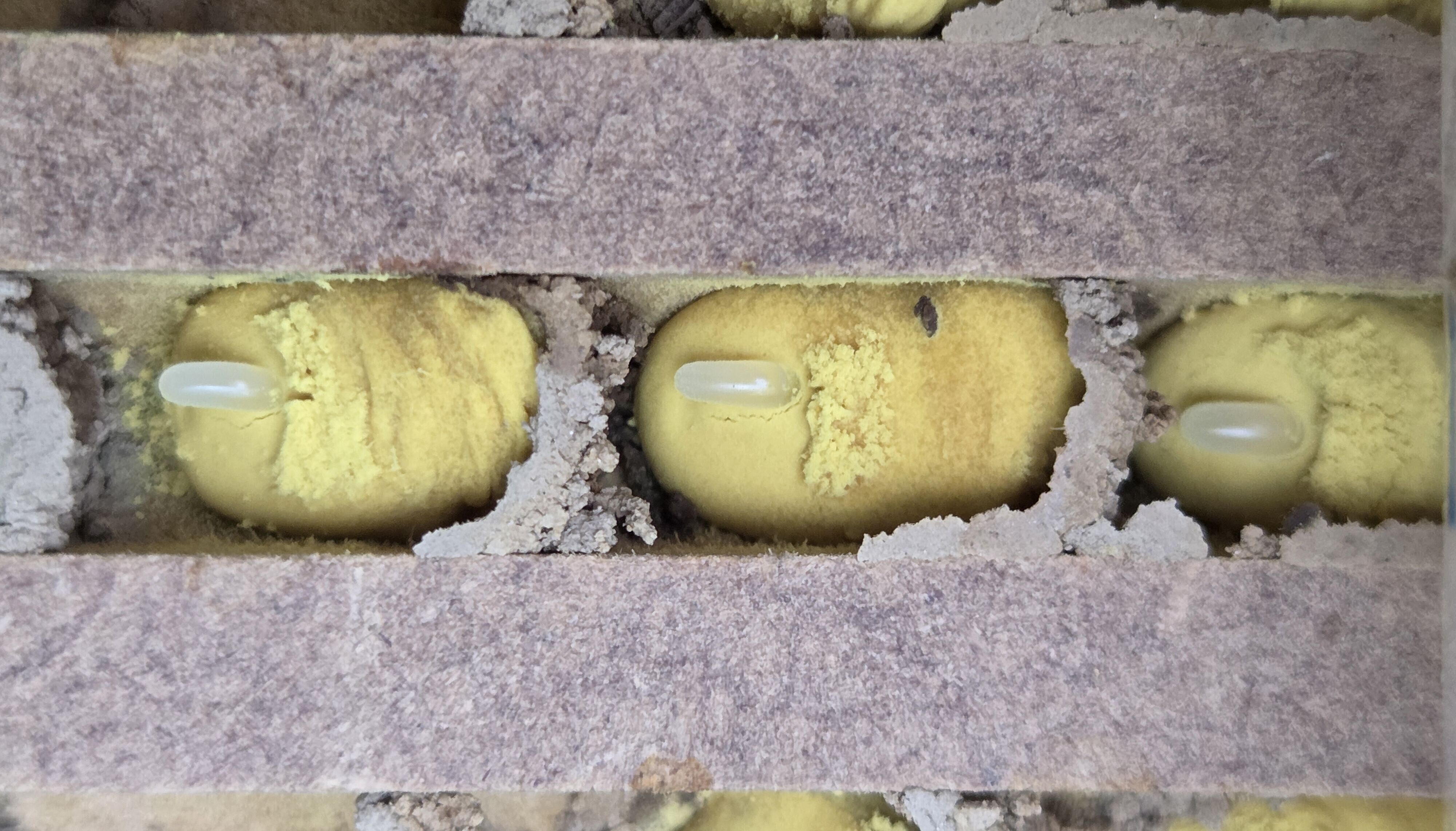
The group has already developed acute oral and contact test protocols for various mason bee species (Osmia spp.). The species tested to date include not only the European species Osmia cornuta and O. bicornis, but also two North American species, O. lignaria and O. cornifrons. In 2025, the official OECD test guideline for the acute contact test was published. Currently, the group is drafting an OECD guideline for Osmia acute oral testing.
The newest species being evaluated is the leafcutter bee, Megachile rotundata. For this species, acute contact and oral testing have been performed across various institutions to gain preliminary experience prior to initiating formal ring-testing.
Semi-field studies
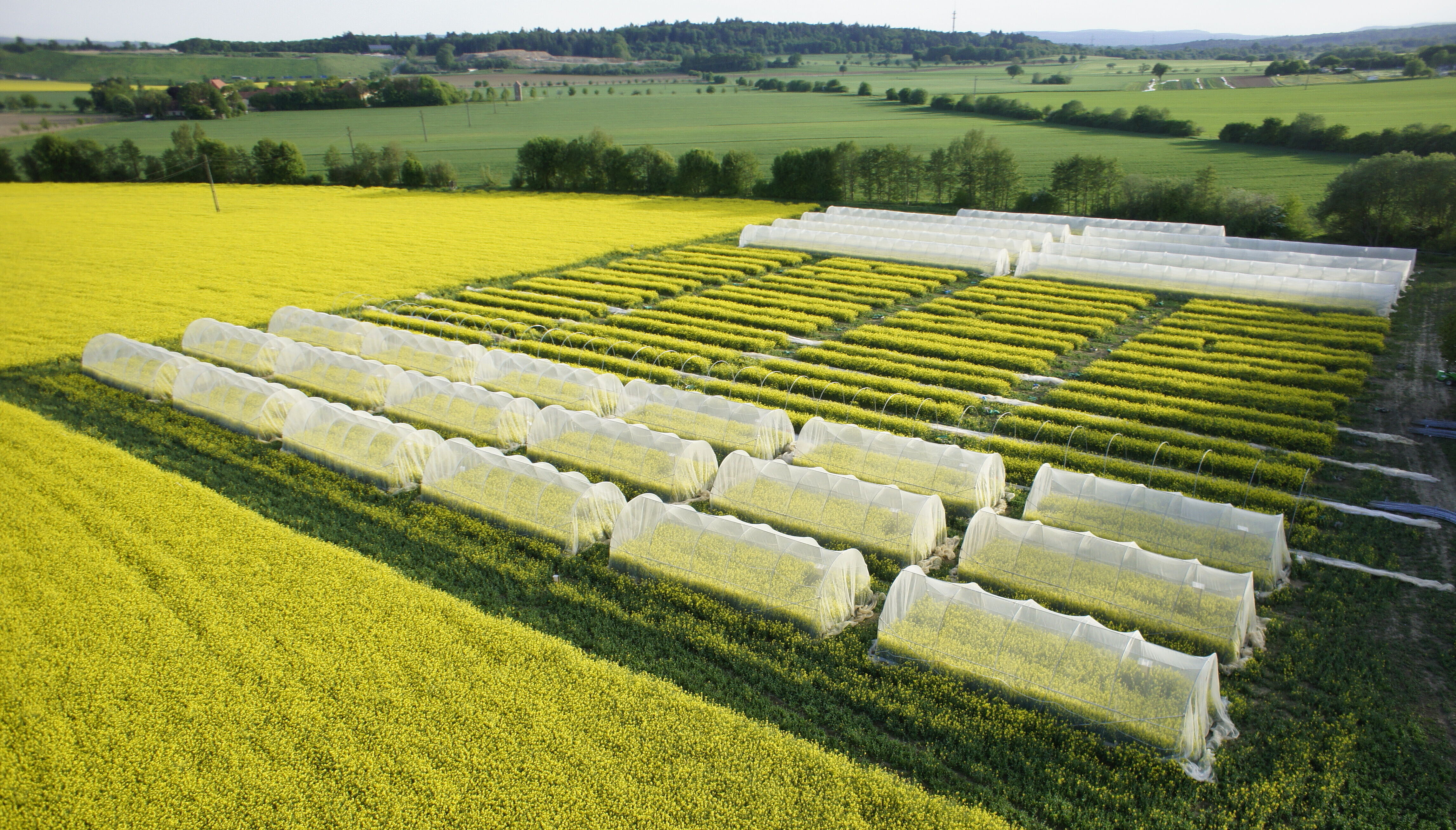
From 2016 to 2017, the sub-group conducted ring tests under semi-field conditions with mason bees (Osmia bicornis and Osmia cornuta). These efforts resulted in a publication providing key testing recommendations in 2020. Based on these initial ring tests, published recommendations, and data from subsequent GLP studies, an official OECD guideline is currently in preparation.
Additionally, efforts were made to adapt this semi-field test design to the leafcutter bee (Megachile rotundata).
Bumble bees
Laboratory studies
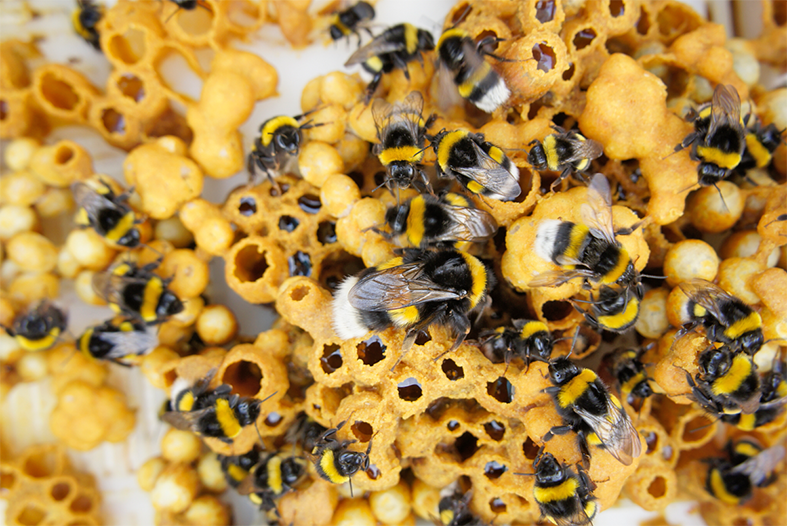
The group has developed acute oral, contact, and chronic testing protocols for the buff-tailed bumble bee (Bombus terrestris), published between 2016 and 2017. Following extensive chronic testing in recent years, the group is now actively drafting an OECD guideline.
Semi-field studies
Between 2016 and 2017, the sub-group conducted semi-field ring tests with the buff-tailed bumble bee (Bombus terrestris). These efforts led to a publication detailing recommendations for semi-field study design in 2022.
Currently, the group is analyzing several datasets focused on the variability of queen production - a key study endpoint - to refine and optimize the semi-field methodology.
Stingless bees
Laboratory studies
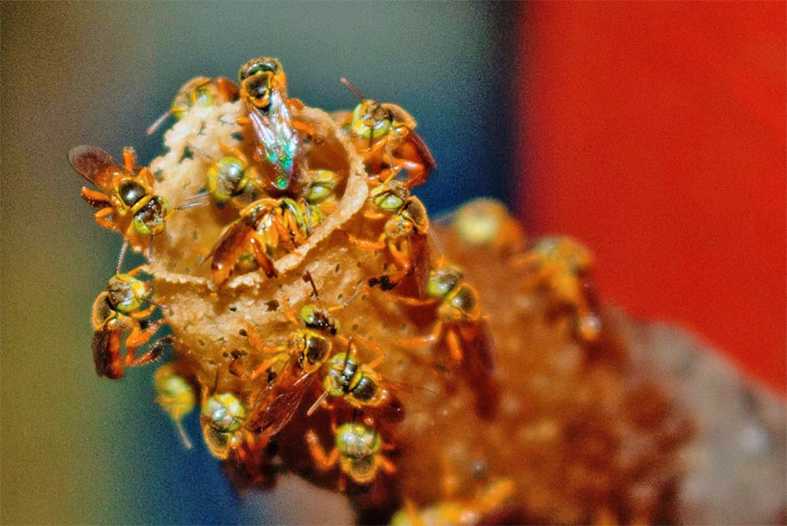
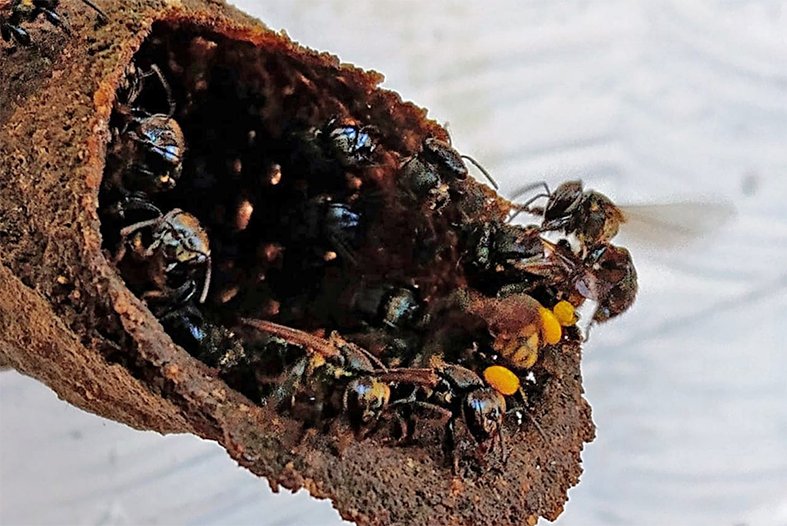
This is the newest sub-group, primarily focusing on Latin America, with potential expansion into other tropical and subtropical regions worldwide. The group has already developed a protocol for larval testing using two stingless bee species (Melipona scutellaris and Scaptotrigona postica).
Additionally, testing has begun to develop acute contact and oral toxicity protocols (Melipona scutellaris, Scaptotrigona postica, and Tetragonisca angustula). Ring tests were conducted from 2018 to 2022, resulting in published recommendations for stingless bee testing in 2018, 2019, 2020, 2023, and 2026.
Inhalt: Past Activities, Publications and Downloads
Guidelines
OECD (2026): Test No. 255: Bumblebee (Bombus spp.), Chronic Oral Toxicity Test (10-Day Feeding).
OECD (2025): Test No. 254: Mason Bees (Osmia sp.), Acute Contact Toxicity Test.
OECD (2017): Test No. 246: Bumblebee, Acute Contact Toxicity Test.
OECD (2017): Test No. 247: Bumblebee, Acute Oral Toxicity Test.
Publications
- Dorigo et al. (2026). Beyond Standard Protocols: Advanced Patented Technology for Comprehensive Toxicity Assessments in Neotropical Bees. Toxics, 14(4), 317. https://doi.org/10.3390/toxics14040317
- Lourencetti et al. (2023). Surrogate species in pesticide risk assessments: Toxicological data of three stingless bees species. Environmental Pollution, 318, 120842. https://doi.org/10.1016/j.envpol.2022.120842
- Klein et al. (2022). Results of Ring‐Testing of a Semifield Study Design to Investigate Potential Impacts of Crop Protection Products on Bumblebees (Hymenoptera, Apidae) and a Proposal of a Potential Test Design. Environmental Toxicology and Chemistry, 41(10), 2548-2564. https://doi.org/10.1002/etc.5430
- Franke et al. (2020): Results of 2-Year Ring Testing of a Semifield Study Design to Investigate Potential Impacts of Plant Protection Products on the Solitary Bee Osmia Bicornis and Osmia Cornuta and a Proposal for a Suitable Test Design. Environmental Toxicology and Chemistry-Volume 00, Number 00—pp. 1–15, 2020 https://doi.org/10.1002/etc.4874
- Rosa-Fontana et al. (2020). What is the most suitable native bee species from the Neotropical region to be proposed as model-organism for toxicity tests during the larval phase?. Environmental Pollution, 265, 114849. https://doi.org/10.1016/j.envpol.2020.114849
- Dorigo et al. (2019). In vitro larval rearing protocol for the stingless bee species Melipona scutellaris for toxicological studies. PLoS One, 14(3), e0213109. https://doi.org/10.1371/journal.pone.0213109
- Dorigo et al. (2018). Biological data of stingless bees with potential application in pesticide risk assessments. Sociobiology, 65(4), 777-779. https://doi.org/10.13102/sociobiology.v65i4.2878